Cost effective products and solutions designed to improve laboratory efficiency, safety and results.
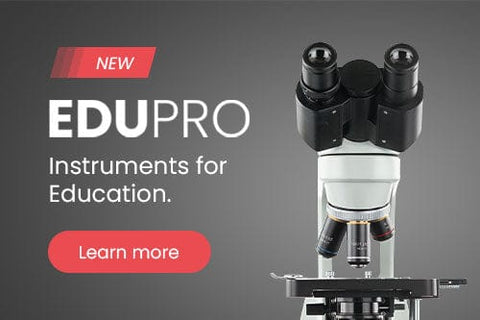
Explore Our New EDUPRO Line
Compound Microscopes
Explore cells, bacteria, and tissue samples with lab-grade clarity.
Browse models
Learn more
Simple setup. Easy controls.
Student Models
Built for regular lab use.
EduPro Models
Capture and share instantly.
Digital Models
Engineered for precision work.
Professional Models
Cells & Tissue
Onion skin, cheek cells, plant tissue, histology.
Microbes
Stained bacteria, protozoa, algae, yeast.
Plant Structures
Pollen, leaf cross-sections, stems, roots.
Medical
Blood smears, tissue samples.
Water Samples
Pond organisms, micro-life samples.
Swipe to explore top picks.
Best Seller
Clear, reliable viewing of cells and microorganisms for study and teaching.
🔍 40X–1000X Magnification
💡 LED Illumination + Adjustable Binocular Head
⚙️ Mechanical Stage + Precision Focus
*Ideal for students, classrooms, and home learning.
View details
New
A trinocular compound microscope for detailed biology work and camera-ready imaging.
💡 3W LED Illumination + Precision Mechanical Stage
📷 Trinocular Head for Camera Integration
*Ideal for advanced students, educators, and labs.
A professional binocular compound microscope for detailed cellular and microbiology work.
🔍 40X–1000X Achromatic Magnification
💡 High-Intensity LED + Abbe Condenser
⚙️ Double-Layer Mechanical Stage
*For clinical labs, university labs, cell biology, and microbiology work.
A professional trinocular metallurgical microscope for opaque materials and polarized inspection.
🔍 40X–500X Magnification
💡 Dual Illumination
✅ Polarized Light for Material & Stress Analysis
*For metallurgy labs, materials inspection, surface analysis, and quality control.
See more recommendations
WHY MAGNIFICATION RANGE MATTERS
Low power (40X–100X) is for orientation — finding the right spot on a slide before zooming in.
Mid power (400X) is where most classroom biology happens — nuclei, chloroplasts, single-celled organisms.
Oil immersion (1000X) is for serious detail — bacteria, fine organelle structure, and most college lab requirements.
Explore Microscope Models
Drag the slider to see the specimen at every magnification level.
Onion Cell Sample
40X — LOW POWER
You can make out individual cell walls forming a brick-like pattern across the onion skin.
Built for advanced learning, teaching, and lab work.
A professional-grade binocular compound microscope built for clear, comfortable daily lab work.
*Ideal for high school labs, college courses, and advanced classroom learning.
A dependable monocular compound microscope for focused learning and daily lab use.
*Made for individual student use in classroom labs.
A digital-integrated compound microscope designed for easy viewing, documentation, and group learning.
*Designed for teaching labs, demos, and documentation workflows.
Built for versatile lab work, this binocular microscope handles both transparent slides and solid specimens with ease.
*Designed for teaching labs that explore a wide range of specimen types.
Explore EduPro
Find My Microscope
Everything you need to complete your setup.
Same day shipping for orders within the contiguous U.S.
Hassle-free 30-day return policy. 100% satisfaction guarantee.
5-year warranty on AmScope microscopes.
Speak to our team of experts and find the products you need.