How to choose the right microscope?

Not sure which microscope fits your needs?

Use this quick guide to find your best fit.

Get started

Which microscope is right for you?

Each type serves a specific purpose, and the right tool ensures the best results.

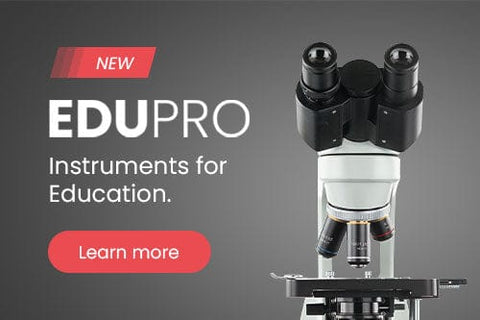
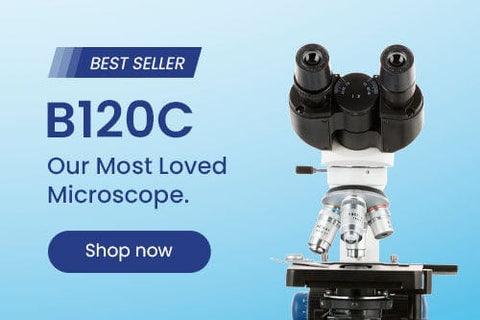
Compound

High magnification for thin, transparent samples such as cells, tissues, and slides.

Shop Compound

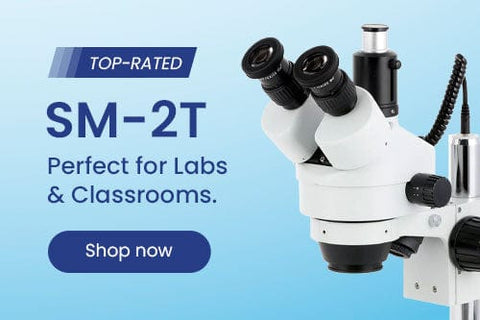
Stereo

3D viewing of solid objects including insects, plants, coins, gems, and tools.

Shop Stereo

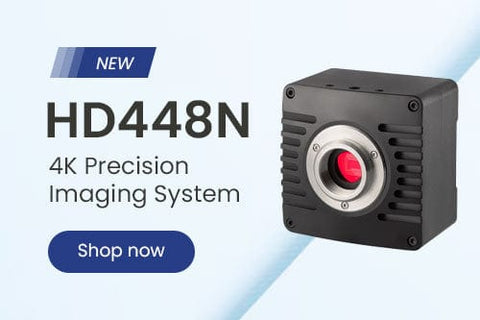
Digital

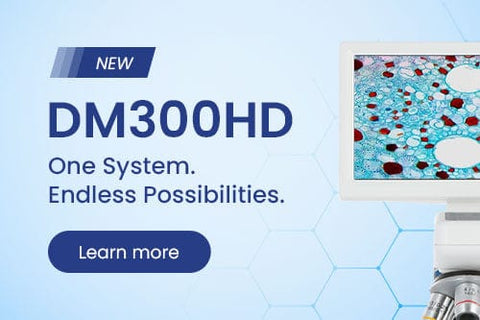
Capture, view, and share images instantly on a screen, no eyepieces required.

Shop Digital

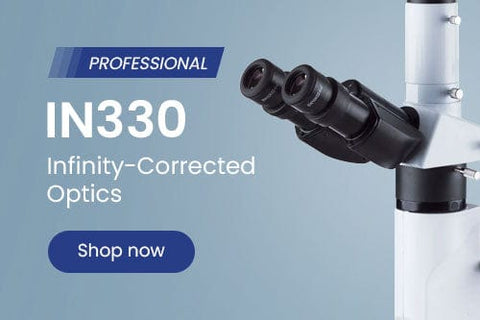
Specialized

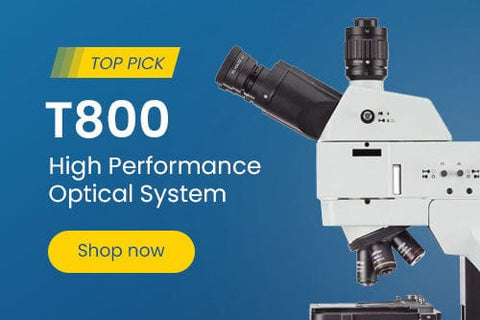
Built for advanced applications like metallurgy, gemology, and fluorescence.

Shop Specialized

Compound

High magnification for thin, transparent samples such as cells, tissues, and slides.

Shop Compound

Stereo

3D viewing of solid objects including insects, plants, coins, gems, and tools.

Shop Stereo

Digital

Capture, view, and share images instantly on a screen, no eyepieces required.

Shop Digital

Specialized

Built for advanced applications like metallurgy, gemology, and fluorescence.

Shop Specialized

Find your microscope in 3 easy steps

Choose your microscope type

Pick from Compound, Stereo, Digital, or Specialized.

Title

*This sets the foundation for how you’ll observe your samples.

Shop by Type

Match your application

Select based on your field: Education, Lab, Industry, Gemology, and more.

Title

*Ensure the microscope is designed for the work you actually do.

Shop by Industry

Compare features & benefits

Dial in specs, add-on accessories, and imaging to fit your workflow.

Title

*Get the right balance of performance and value.

Recommended Microscopes

  • Compound

  • Stereo

  • Digital

  • Specialized

Discover more

Discover more

Discover more

Discover more

Recommended Accessories

Discover more

Got Questions? We're here to help.

Frequently Asked Questions

Still need help? Speak to our team of experts.

What's the difference between compound, stereo, digital, and specialized microscopes?

Compound: High magnification for thin, transparent samples on slides (e.g., cells, tissues, microbes).
 

Stereo: Lower–mid magnification, true 3D view for solid objects (e.g., insects, plants, coins, PCBs).
 

Digital: Screen-based viewing/recording; comes as desktop or handheld.
 

Specialized: Purpose-built (e.g., metallurgical, gemological, fluorescence, polarized).
Which type should I choose for my application?

Education: Compound (slides) and Stereo (3D specimens).
 

Research/Labs: Compound or Specialized with better optics & cameras.
 

Electronics/Industry: Stereo (boom stand + ring light) or Digital.
 

Gemology: Specialized gemological stereo (darkfield/polarization).
 

Metallurgy/Materials: Metallurgical (reflected/epi illumination).
 

Hobby/Fieldwork: Stereo or Handheld Digital.

Explore more

How much magnification do I need?

Cells/tissues: 100×–400× (up to 1000× with oil for bacteria).
 

Insects/plants/coins/PCBs: 10×–40× (up to ~90× for fine details).
 

Gems/stone inspection: 10×–60× typical.
 

*Higher magnification narrows field of view—choose only what you need.

What is working distance and why does it matter?

The space between the lens and your sample.
 

Short (compound) = highest magnification for slides.
 

Long (stereo) = room for tools/soldering/bulky parts.

*Pick longer working distance for hands-on tasks.

Which illumination do I need?

Transmitted (below) for transparent slides (compound).
 

Reflected/Epi (above) for opaque solids (stereo, metallurgical).
 

Ring light for glare-free surface detail; darkfield/polarizers for gems/metals; LED for cool, even light.

Do I need 2D or 3D viewing?

2D (Compound): Flat specimens on slides; best for cellular detail.
 

3D (Stereo): Depth perception for inspection, assembly, and dissection.

Should I get a trinocular head and camera?

A trinocular port lets you attach a camera without losing eyepiece use.
Choose USB/HDMI/Wi-Fi based on how you record/share. Sensor size & optics quality matter more than megapixels.

What's better, Zoom vs. fixed (turret) stereo?

Zoom stereo: Smooth, continuous magnification—fast for inspection, most versatile.
 

Turret/dual-power: Fixed steps (e.g., 10×/20×)—cost-effective and consistent for classrooms.

Should I get a handheld digital vs. desktop digital microscope?

Zoom stereo: Smooth, continuous magnification—fast for inspection, most versatile.
 

Turret/dual-power: Fixed steps (e.g., 10×/20×)—cost-effective and consistent for classrooms.

Learn more

How should I think about budget?

Starter ($250–$400): Student kits, basic stereo, handheld digital.
 

Core ($400–$1,000): Classroom & hobby; solid stereo/compound.
 

Pro ($1,000–$2,500): Lab/QC; zoom stereo with boom stands, trinocular options.
 

Advanced ($2,500+): Metallurgical, gemological, fluorescence, research-grade.

Shop now